
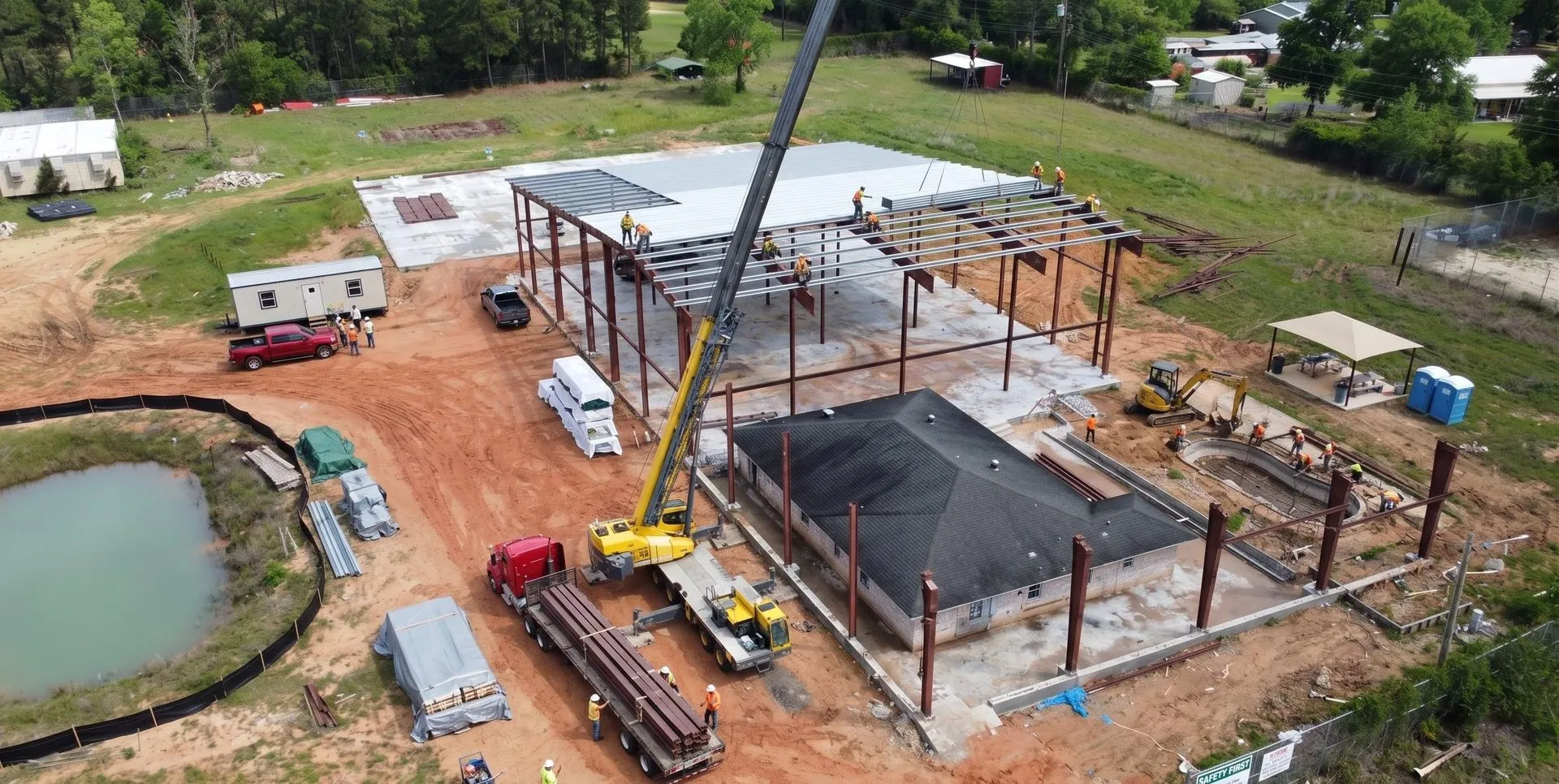
Why Your Commercial Build Keeps Getting Delayed (And What an Integrated GC Does Differently)
A look at where commercial construction delays actually originate, and the structural change that eliminates most of them.
If you have run a commercial construction project that came in late, you already know what this post is going to say. The schedule slipped. The change orders piled up. Two firms blamed each other for problems neither one would own. The leasing commitment you made to a tenant got renegotiated. The Certificate of Occupancy you needed for opening day came two months after you originally scheduled.
You probably blamed the general contractor. Or the architect. Or the weather. Or trade availability. Or the project manager. The honest answer is that you were probably right about all of those, but only at the symptom level. The actual source of most commercial construction delays sits one layer underneath the people on the project. It is structural, not personal.
This post is for facilities managers, corporate procurement officers, commercial developers, and COOs who have lived through commercial construction overruns and want to understand why they keep happening. The goal is to give you a framework for evaluating GC firms that catches the delay risk before you sign a contract, rather than after.
The pattern that shows up in every delayed project
After enough commercial projects, the delay pattern becomes predictable. It almost never looks the way owners describe it in the moment.
In the moment, owners describe delays as:
- “The contractor was slow to mobilize”
- “The architect kept changing the design”
- “We had unexpected site conditions”
- “Permitting took forever”
- “Trade availability was tight”
- “The supply chain hit us”
All of these are real. None of them are the actual cause.
The actual pattern, once the dust has settled and the project is closed out, looks like this:
At some point during the project, a question came up that required input from a party other than the general contractor. Maybe it was a structural condition that needed an engineer to evaluate. Maybe it was a civil drainage question that needed the civil engineer. Maybe it was a tenant fit-out modification that needed architectural sign-off. Maybe it was a permit revision that needed a re-stamped drawing.
The question got asked. The clock started running. The party who needed to respond was a separate firm under a separate contract with separate priorities and a separate schedule. They responded when they responded. The construction crew either waited or worked around the question, accumulating risk.
This happens dozens of times on a typical commercial project. Each instance adds 2-7 days to the schedule. Stack enough of them together and the project is 6-12 weeks late.
The contractor did not cause the delay. The architect did not cause the delay. The engineer did not cause the delay. The structure of having those parties exist as separate firms with separate contracts caused the delay. Each instance was just a symptom.
Where the handoffs hide
The handoff between firms is invisible to owners until it becomes a problem. Most owners think of their project as “I hired a GC and an architect and an engineer, and they coordinate among themselves.” In practice, here is what actually happens between firms during commercial construction.
01
Engineering RFI to design firm
Time elapsed
3-7 business days
02
Design change to architect
Time elapsed
1-3 weeks
03
Permit revision through municipal review
Time elapsed
2-6 weeks
04
Special inspection coordination
Time elapsed
2-5 business days
05
Final closeout and warranty handoff
Time elapsed
4-10 weeks
Handoff 1 — Engineering RFI to design firm
The construction crew encounters a field condition that conflicts with the structural or civil drawings. The GC’s site superintendent flags it. The GC’s project manager emails the engineer of record. The engineer responds when they get to it (their billing is usually per-RFI, not per-day-of-delay-prevented). The response either confirms the design works as drawn, requires a revision, or requires a re-engineer.
Time elapsed in the typical case: 3-7 business days for routine RFIs. 2-4 weeks for revisions that require a re-stamped drawing.
What is happening underneath: the engineer is a separate firm with separate priorities. Your project is one of dozens they have active. Your RFI sits in their queue.
Handoff 2 — Design change to architect
The owner wants to modify the tenant layout, or the GC discovers a constructability issue that requires a design revision, or a code review surfaces a compliance issue. The architect gets the request. The architect produces revised drawings. The drawings get re-stamped, re-issued, re-distributed.
Time elapsed in the typical case: 1-3 weeks for moderate revisions. 4-8 weeks for revisions that trigger new permit submission.
What is happening underneath: the architect is a separate firm. Their incentive is to deliver acceptable design work, not to optimize your construction schedule. They charge for the revision time, which means they do not lose money on the delay.
Handoff 3 — Permit revision back through municipal review
Most design changes during construction require permit revisions. The architect or engineer prepares the revised plans. The plans go back to the municipal authority for review. Review takes whatever it takes (varies wildly by jurisdiction, 1-8 weeks typical for revisions).
Time elapsed in the typical case: 2-6 weeks for routine revisions. 6-16 weeks for substantial changes.
What is happening underneath: the municipal authority is not your contractor. Their review timeline is not negotiable. The GC has to wait. Crews on site either wait or work around the un-permitted area.
Handoff 4 — Special inspection coordination
Commercial construction requires special inspections at specific phases (post-tensioned concrete, structural welding, masonry, fire-resistant assemblies). The inspector is usually a third-party firm. Scheduling the inspector requires advance coordination. Inspector availability does not always match construction-readiness.
Time elapsed in the typical case: 2-5 business days per inspection from request to completion. Repeated 4-12 times during construction.
What is happening underneath: the inspector is a separate firm with a separate schedule. Their availability depends on their other projects. The GC has to schedule around them.
Handoff 5 — Final closeout and warranty handoff
At project closeout, the GC produces a punch list, the architect signs off, the engineer signs off, the inspector signs off, the municipal authority issues the Certificate of Occupancy. Each sign-off is a handoff to a different party.
Time elapsed in the typical case: 4-10 weeks from substantial completion to final CO.
What is happening underneath: each party has to schedule their own final review. The closeout sequence has built-in dependencies and built-in delays.
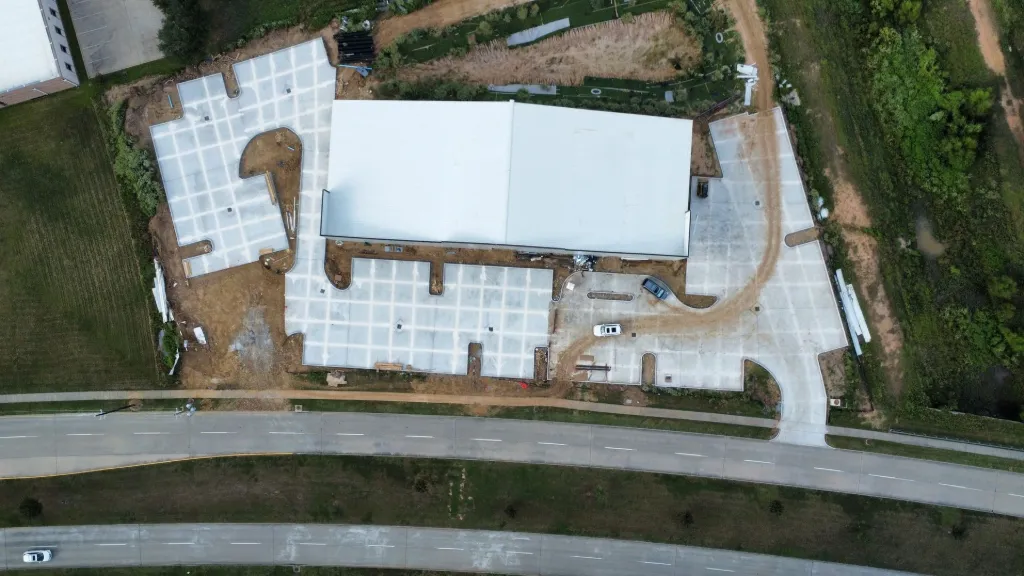
The schedule math nobody runs
Most owners run construction schedules assuming handoffs are zero-time events. The Gantt chart shows “engineering revision” as a 2-day task because that is the time the engineer needs to actually do the work.
The real math includes the queue time before the work happens, the communication overhead, the document handoff, and the rework that often follows. The 2-day engineering task is actually 5-9 days of calendar time.
Hidden in the schedule
6–12weeks
of hidden handoff time baked into a typical commercial project
Stack the realistic math across all five handoff categories above, and the typical commercial project has 6-12 weeks of “handoff time” baked into the schedule that does not show up in any project plan.
This is why projects come in late. Not because anyone is bad at their job. Because the structure of separate firms creates calendar overhead that linear schedules do not account for.
What an integrated firm changes
An integrated firm delivers multiple disciplines under one organization. Engineering and construction live in the same firm. Permit coordination is part of the same scope. Sometimes architecture, MEP, civil, structural, and construction are all under one roof. Sometimes a subset.
For commercial construction specifically, the integration that matters most is engineering and construction in the same firm. This is the integration that eliminates the handoffs that cause the most calendar overhead.
Traditional GC Model
Separate firms, separate clocks
- Separate contracts
- Separate engineering queue
- External inspection scheduling
- Slower RFI response
- More handoff overhead
Integrated Engco Model
One firm, one accountable clock
- Engineering + construction under one firm
- Same-day field decisions
- In-house permit revision support
- Faster special inspection coordination
- Reduced schedule overhead
Here is what changes when engineering and construction are integrated.
RFI cycles compress from days to hours
The construction crew encounters a field condition. The site superintendent walks the engineer through it the same day. Often within the same site visit. The engineer responds with a field decision, a marked drawing, or a quick design adjustment. Work continues.
Time elapsed: hours, not days.
Design revisions happen without billable change orders
When a field condition requires a design adjustment, the integrated firm makes the adjustment as part of the original scope. There is no incentive to bill separately for revisions because the firm bears the schedule cost of delays.
Time elapsed: same day or next day.
Permit revisions get prepared correctly the first time
When a design change requires a permit revision, the integrated firm’s engineer prepares it with full knowledge of the construction context. The revision goes to the municipal authority once, not twice or three times. Review time on a clean submission is significantly shorter than review time on a flawed submission that requires multiple resubmissions.
Time elapsed: weeks instead of months.
Special inspections coordinate naturally
Integrated firms typically perform special inspections themselves (the engineer of record can serve as the inspector for many inspection types). The inspection happens during the same site visit as the engineering review. No third-party scheduling required.
Time elapsed: same day as construction readiness.
Closeout sign-offs cluster around one party
The integrated firm produces the punch list, signs off on engineering compliance, and coordinates the municipal authority’s final review. Architect and inspector sign-offs are still required, but the bulk of the closeout happens within one firm rather than across four or five.
Time elapsed: 2-4 weeks instead of 4-10.
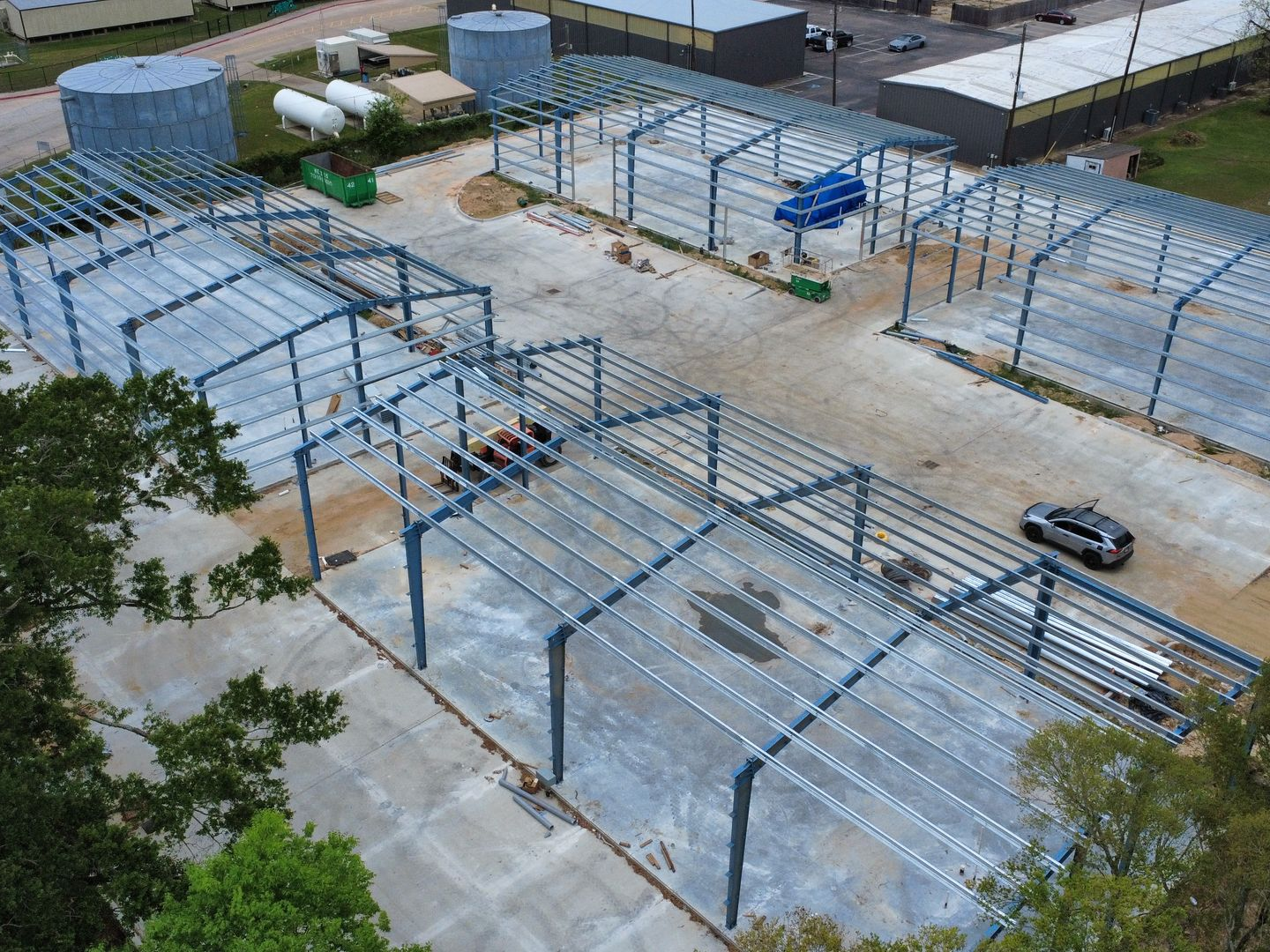
The honest assessment of what integrated firms cannot do
Integrated firms are not magical. They do not eliminate every commercial construction problem. There are three areas where the integrated model does not help.
Site conditions that genuinely surprise everyone. Unforeseen subsurface conditions, environmental remediation requirements that surface mid-project, structural conditions in existing buildings that no investigation would have caught – these affect integrated firms the same way they affect traditional GC arrangements.
Owner-driven scope changes. When the owner decides mid-project to add square footage, change use, or significantly modify the program, the schedule extends regardless of firm structure. Integrated firms handle the engineering and construction implications faster, but the underlying scope expansion is what it is.
Material lead times and trade availability. Steel lead times, electrical equipment supply chain, and trade availability are external constraints that integrated firms experience along with everyone else.
What integrated firms do change is the schedule overhead created by inter-firm coordination. That is where the 6-12 weeks lives. Not the unavoidable schedule realities. The avoidable ones.
What this means for procurement-grade evaluation
When a buyer is evaluating GC firms for a commercial project, the most useful question they can ask is this.
A traditional GC will describe the process of sending the RFI to the engineer of record, waiting for response, then implementing. The schedule slack is usually somewhere in the description.
An integrated firm will describe the same process internally: the site superintendent flags it, the engineer walks the site, a decision happens, work continues.
The first model is not wrong. It is the standard model in commercial construction. But it builds the handoffs into the schedule, and the handoffs cause the delays.
Three other procurement-grade questions worth asking:
“Who is responsible for permit revisions during construction, and where does that work happen?” Traditional firms: outside engineer of record, separate billing. Integrated firms: in-house, same scope.
“How are special inspections coordinated?” Traditional firms: outside inspector, scheduled separately. Integrated firms: in-house engineer or coordinated tightly with the construction sequence.
“What does your typical schedule contingency look like, and what drives it?” Traditional firms tend to have larger schedule contingencies because they are accounting for handoff overhead. Integrated firms tend to have smaller contingencies because the handoff overhead is reduced.
The schedule contingency itself is the tell. A 12-week contingency on a 9-month project is normal for traditional arrangements. A 4-week contingency on the same project is normal for integrated arrangements. Same total duration, but the integrated firm hits the schedule and the traditional firm extends.
Where Engco fits in this picture
ENGCO delivers engineering and construction under one Texas firm. This is the structural change that eliminates the handoffs above for our commercial clients.
Our engineering team includes Texas-licensed Professional Engineers. Our construction team has delivered 243 projects across Texas operating environments including restaurant, retail, industrial, multifamily, and municipal work. The engineer who designs your foundation is in the same firm as the construction team pouring it. The site civil engineer who coordinates drainage is in the same firm as the site grading crew. Permit revisions, special inspections, and engineering RFIs happen in-house rather than across vendors.
This is not the only viable model for commercial construction. Traditional GC arrangements with separate engineering firms continue to deliver excellent commercial work, particularly when the project is straightforward and the firms involved have worked together before. The integrated model becomes most valuable when projects have meaningful complexity, tight schedules, or owner stakes that depend on delivery dates.
If your last commercial project ran late, and you suspect handoffs were the actual reason, the integrated model is worth understanding before you scope your next project.
Evaluate firms on how they handle handoffs, not on how they describe themselves.
The decision in one sentence
Most commercial construction delays are not caused by bad firms or bad luck. They are caused by the calendar overhead of separate firms coordinating across separate contracts. Integrated firms eliminate that overhead by structure. Evaluate firms on how they handle handoffs, not on how they describe themselves.
FAQ
Frequently asked
questions.
Is the integrated model always better than a traditional GC arrangement?
No. Traditional GC arrangements work well for projects with established teams, simple scope, and flexible schedules. The integrated model becomes most valuable when projects have meaningful complexity, tight schedules, or owner stakes that depend on delivery dates.
How do I know if a firm is genuinely integrated vs marketing itself as integrated?
Ask whether their engineering team is in-house and whether the engineers hold Texas Professional Engineer licenses. Ask whether they bill separately for engineering work during construction or whether it is included in the construction scope. Ask whether permit revisions are handled in-house. Marketing claims dissolve under specific operational questions.
Does the integrated model cost more than traditional GC arrangements?
Direct construction cost is typically comparable. Integrated firms may have slightly higher hourly rates for engineering work, but the total project cost is usually lower because change orders, schedule extensions, and rework costs are reduced. The savings on the back end usually exceed any premium on the front end.
What types of commercial projects benefit most from the integrated model?
Restaurant build-outs, retail roll-outs, industrial facilities, multifamily developments, and any project where leasing commitments or tenant occupancy dates create real schedule pressure. The benefit is proportional to schedule sensitivity.
Can I integrate engineering into my project at the last minute if I’ve already hired a traditional GC?
Sometimes, but it works less well as a retrofit than as an upfront structural choice. The benefit of integration comes from the engineer being involved from project kickoff through closeout. Adding an integrated firm mid-project captures some benefit but not the full effect.
What questions should I ask a firm during commercial GC evaluation to assess integration?
Walk me through your structural RFI process. Who handles permit revisions during construction. How are special inspections coordinated. What does your typical schedule contingency look like. Are your engineers in-house or contracted. These five questions reveal whether the firm is structurally integrated or just marketing itself as integrated.

More from Insights
Related Insights.
5 Signs You Need a Structural Engineer
Planning a big project or living in an older building? A structural engineer can help you avoid costly problems. Maybe you’re about to…

A Guide to Structural Engineering
Structural engineering decisions can affect nearly every stage of a development project. From foundation requirements and material…

The Role of Industrial Construction Management
Industrial construction management plays an important role in planning and completing large construction projects. It involves…

Industrial Construction Trends to Watch
Share this article Industrial construction in Houston, Texas, is evolving through new technologies, improved processes, and changing…
How a Commercial Construction Company Adds Value
Home / Insights / Structural Modeling for Efficient Project Delivery Construction How a Commercial Construction Company Adds Value 7 min…

Structural Modeling for Efficient Project Delivery
Home / Insights / Structural Modeling for Efficient Project Delivery Engineering Structural Modeling for Efficient Project Delivery 7 min…
6 Benefits of 3D CAD Modeling in Construction
A look at where commercial construction delays actually originate, and the structural change that eliminates most of them.

What to Look for in MEP Contractors
A look at where commercial construction delays actually originate, and the structural change that eliminates most of them.
Overcoming Challenges in Engineering Projects
A look at where commercial construction delays actually originate, and the structural change that eliminates most of them.

Questions to Ask Before Hiring Civil Contractors
A look at where commercial construction delays actually originate, and the structural change that eliminates most of them.
Scoping a commercial project?
Get engineering and construction from one Texas firm.
ENGCO delivers civil engineering, structural engineering, and construction under one firm for Texas commercial, industrial, multifamily, and municipal projects. The integrated model is the structural reason our commercial projects run on schedule. Talk to our commercial team about your project scope and timeline.